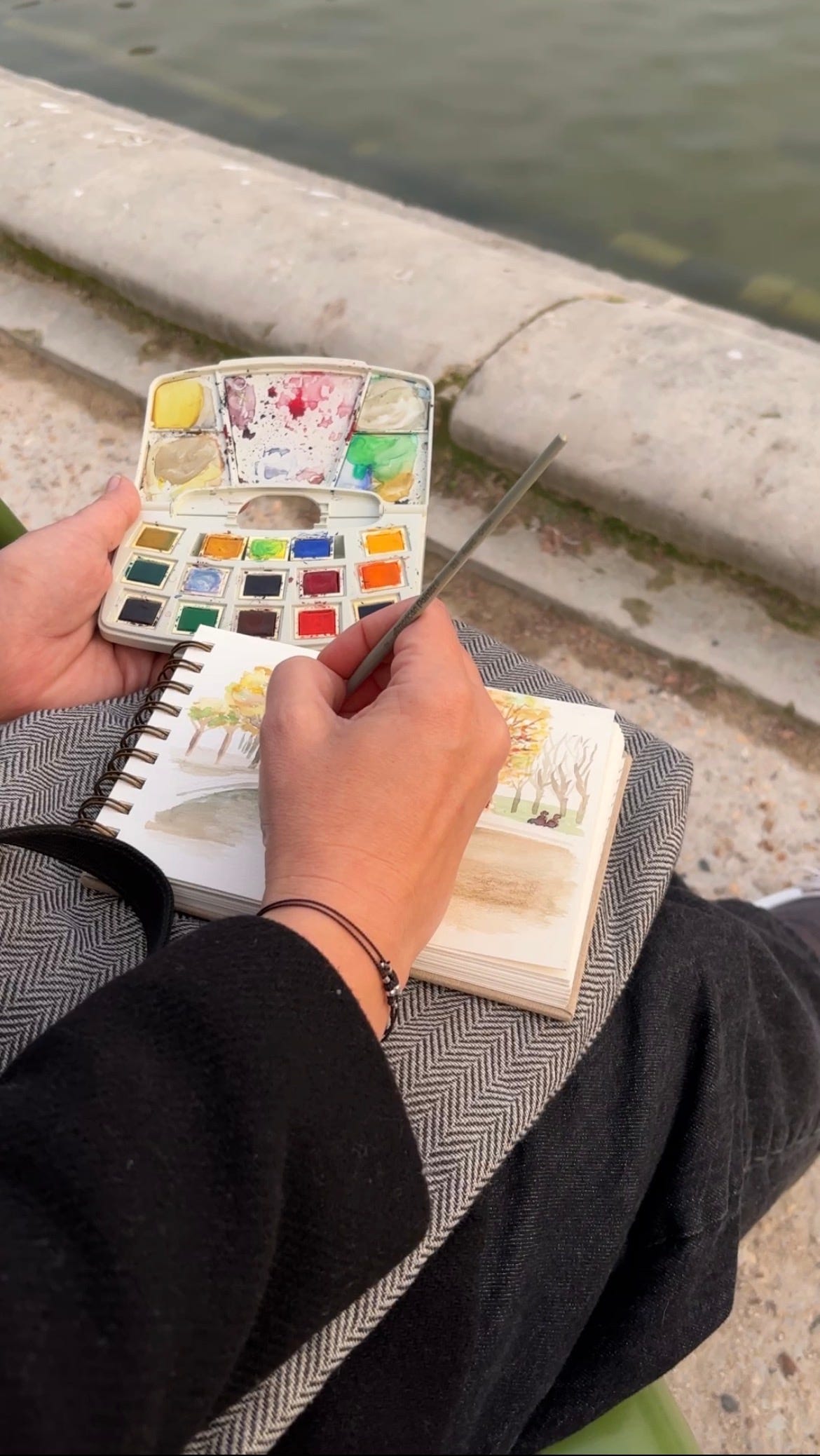
The Conditions for Creativity
What neuroscience—and our environments—reveal about how creative thinking actually works

Lately, I’ve been thinking a lot about creativity.
What it actually is.
How we access it.
And how we sustain it in a world that’s asking more of it from us than ever before.
Especially now—when creativity is often framed as one of the last distinctly human advantages in the age of AI. We’re being asked to raise the bar constantly, while structuring our lives in ways that quietly undermine it.
The more I’ve been learning about the neuroscience of creativity this past year, the more I’ve realized something surprising: I may need to unlearn many of the habits I was taught in architecture school.
The Myth of the Creative Grind
In architecture school, creativity came wrapped in a particular culture.
Long nights in dark studios.
All-nighters fueled by junk food and caffeine.
Weeks of sitting in front of a glowing screen.
And finally, presenting your fragile ideas to a room full of critics ready to tear them apart.
It was treated as a rite of passage.
Looking back, it’s strange that we assumed this environment would produce our best thinking. You don’t need a neuroscientist to tell you that sleep deprivation, stress, and isolation are not ideal conditions for imagination.
I’m no longer in a design studio, but many of those patterns linger. Instead of studio desks, I now spend most of my day in front of a computer in an office. My calendar is packed with back-to-back Zoom meetings. When I’m not in meetings, I’m racing to keep up with emails and Slack messages that never seem to stop. And with two toddlers at home, the all-nighters still happen—just for different reasons.
It raises an uncomfortable question:
How is this daily rhythm supposed to produce our most innovative ideas?
The honest answer is: it probably isn’t.
Over the past year I’ve been digging into what neuroscience, psychology, and creativity research actually say about how imagination works. Many of the answers are surprisingly simple. In fact, most of them are things we already intuitively know—but rarely prioritize. Understanding the biology behind them might help us take them more seriously.
Take Care of the Instrument
Creativity begins with the basics.
Sleep.
Food.
Movement.
Time outside.
These aren’t luxuries—they’re biological fuel. When our batteries are charged, our brains function better, attention improves, memory strengthens. Our minds become more capable of forming new connections. In other words, creativity is not separate from physical well-being. It’s built on top of it, and yet these are often the first things we sacrifice when work gets busy.

Curiosity Over Expertise
One of the most memorable moments from a recent lecture came from the Finnish architect and thinker Juhani Pallasmaa. When asked about how he developed his career, he offered advice that felt almost radical in today’s hyper-specialized world.
Instead of pursuing expertise, he said, pursue wisdom as a generalist.
Pallasmaa has somewhere between twelve and fifteen thousand books in his personal library. And yet he mentioned that he stopped buying architecture books nearly thirty years ago. Not because architecture no longer interested him, but because architecture is not really about architecture. The books that shape his thinking now are about biology, psychoanalysis, philosophy, literature, art, and history. These are the disciplines that explore how humans think, feel, behave, remember, and experience the world. And architecture, at its core, is about shaping the environments where those human experiences unfold.
The same principle applies far beyond architecture. Creativity rarely comes from going deeper and deeper into one narrow silo. More often it emerges at the intersection of different fields, when ideas from one domain suddenly illuminate a problem in another. In that sense, curiosity may be more important than expertise.
Fill the Well
Julia Cameron, author of The Artist’s Way, writes about creativity as drawing from an inner reservoir of images and experiences. She calls it “filling the well.”
“The inner well… is ideally like a well-stocked fish pond.”
In order to create, we need material to draw from. That means engaging with the world and art of all kinds- painting, music, literature, film, architecture, dance. Each experience adds to our internal library of images and ideas.
Neuroscience supports this. Creative thought relies heavily on divergent thinking—the ability to generate multiple possibilities from a single stimulus. The more references we have in memory, the more potential connections our minds can form.
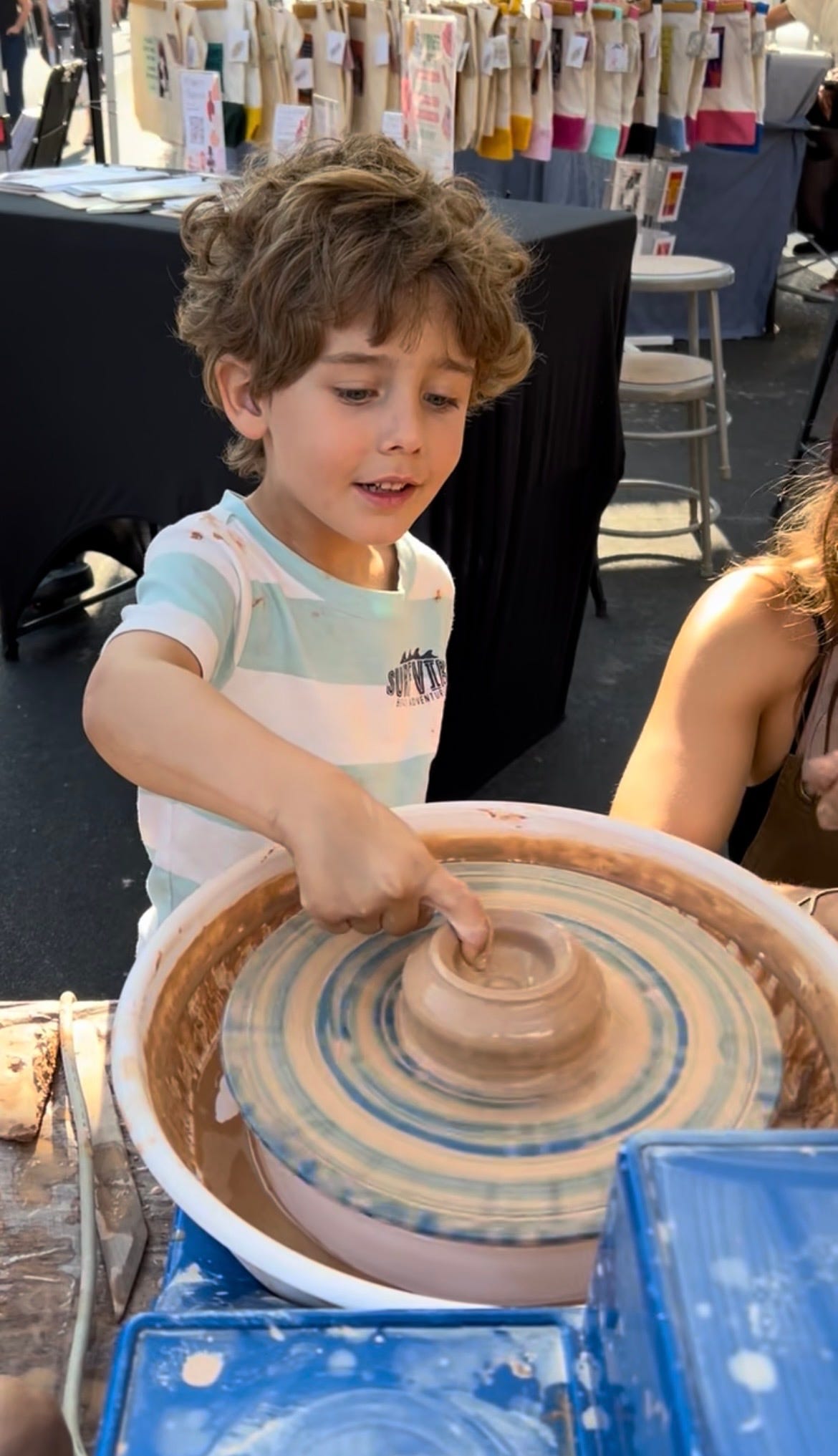
Making art matters too. Not because it has to be good, but because the act of making activates different cognitive processes. Annie Murphy Paul writes in The Extended Mind that thinking often becomes clearer when we engage our bodies and hands.
Sometimes throwing an ugly pot on a wheel or sketching a messy drawing is exactly what unlocks a solution we’ve been stuck on.
Happiness Helps
Here’s another finding that might sound almost too simple: doing things that make you happy can actually increase creativity.
Research discussed by the Huberman Lab suggests that dopamine—the neurotransmitter associated with reward and motivation—is also closely linked to divergent thinking. When we’re in a positive emotional state, our brains become more flexible. We generate ideas more freely. We’re more willing to explore unusual possibilities.
In short: good moods expand our thinking.
This also explains why creativity often flourishes during activities we enjoy. When we’re engaged and interested, it’s easier to enter a state of flow—where attention deepens and time seems to disappear.

Accessing the Liminal Mind
Many of the most creative insights don’t appear when we’re trying the hardest to think. They appear in the strange space between thinking and not thinking.
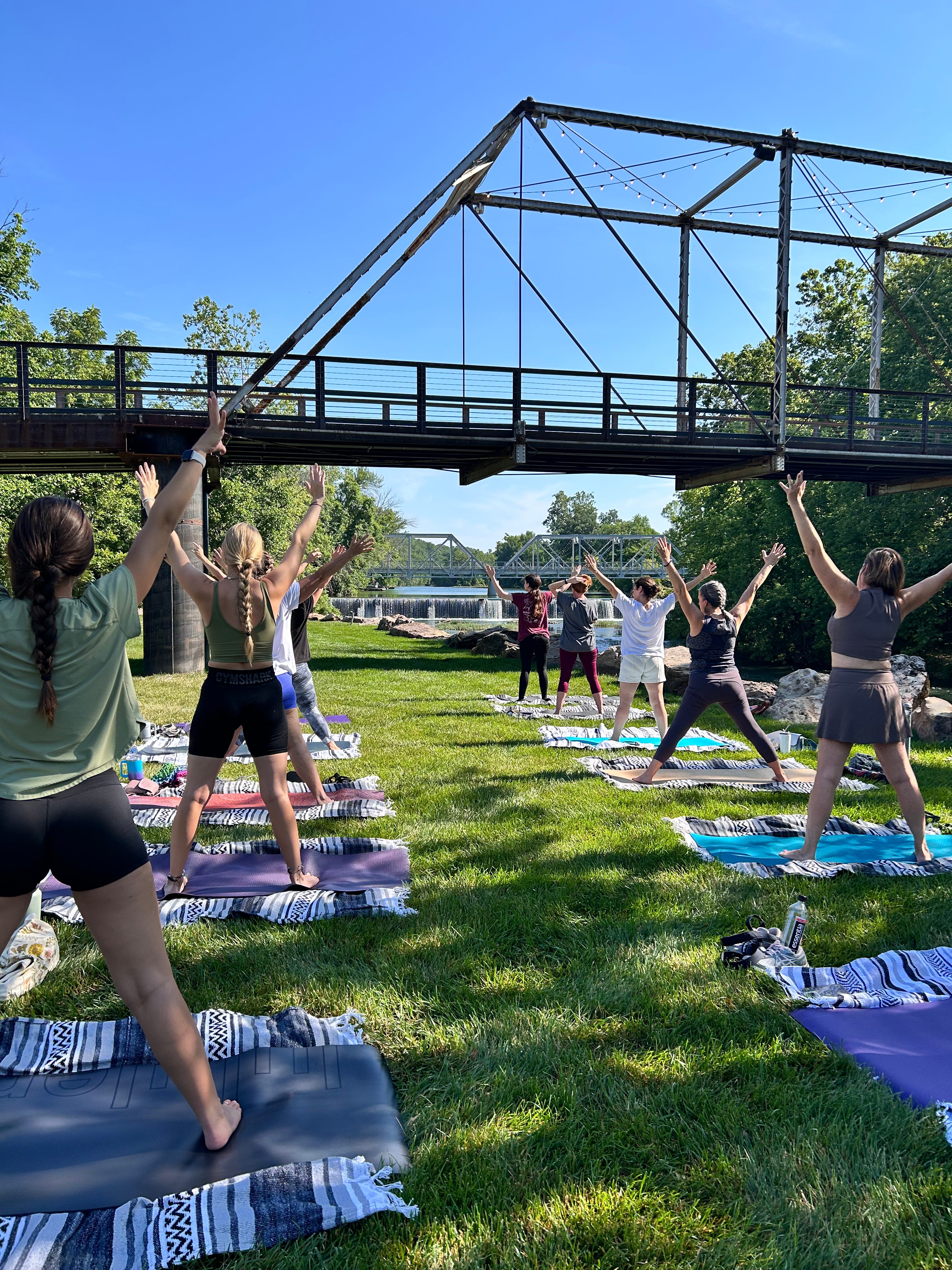
You might recognize it from moments in the shower, during a walk, while relaxing in a hammock, or halfway through a yoga class—when the analytical mind loosens its grip and something else takes over. Neuroscientists sometimes describe this as a shift between different cognitive networks. When the brain moves out of a tightly focused, task-driven mode, the default mode network becomes more active. This network is associated with imagination, memory integration, and spontaneous insight.
In other words, when we stop forcing ideas, our brain begins quietly reorganizing information in the background. Andrew Huberman often talks about how activities like meditation, breathwork, yoga, or even a simple walk can help move us into this more generative mental state.
What’s interesting is what happens after that. If we follow these moments of openness with focused work—brainstorming, sketching, writing, designing—we can capture the ideas that surfaced in that liminal state and begin shaping them into something concrete. It’s not just about relaxation. It’s about opening cognitive space, and then directing attention at the right moment.

A Missing Ingredient: The Spaces Around Us
One thing that becomes impossible to ignore once you start studying neuroscience and architecture is how profoundly our environments shape our mental states. The places where we work are rarely designed with creativity in mind.
We sit under artificial lighting.
We move between screens and meetings.
We spend long stretches indoors without natural light, fresh air, or sensory variation.
Yet our brains evolved to think, move, and imagine in far richer environments. Spaces with texture, daylight, views, changing stimuli, and moments of refuge. Places where we can shift between focus and restoration. Environments that allow the mind to wander before asking it to concentrate again. In many ways, this is exactly what architecture has always been about. Not just creating buildings, but shaping the conditions in which human thought and experience can flourish.
Rethinking Productivity
This leads to a question that feels almost subversive within modern work culture.
What if the most productive thing you could do during the workday wasn’t answering another email or attending another meeting? What if it was booking a yoga class in the middle of the afternoon?
Or going for a long walk.
Or getting a massage.
And then sitting down afterward to sketch a new concept, write a proposal, or solve a problem that’s been stuck for weeks. It might sound indulgent, but from a neurological perspective, it could actually be the most efficient path to generating truly creative insights.
We tend to measure productivity in terms of visible activity—how many tasks we complete, how quickly we respond, how busy we appear. But creativity operates on a different timeline. If you can generate better ideas faster, and enjoy the process more along the way, isn’t that actually the most productive outcome?
Sometimes the most valuable work is happening when it looks like we’re doing nothing at all.
Designing for Creativity
None of this means abandoning discipline or hard work, but it might mean rethinking the conditions that allow our best ideas to emerge.
Prioritizing sleep and time outside.
Following curiosity across disciplines.
Filling our minds with art, literature, and new experiences.
Creating moments where the brain can wander before asking it to focus.
In other words, designing our lives—and our environments—in ways that support imagination.
I’m still experimenting with all of this myself. But the more I learn about how the brain works—and the more I listen to thinkers like Pallasmaa—the more convinced I am that creativity isn’t something we can force. It’s something we cultivate and sometimes the most creative act is simply giving the mind the space it needs to surprise us.